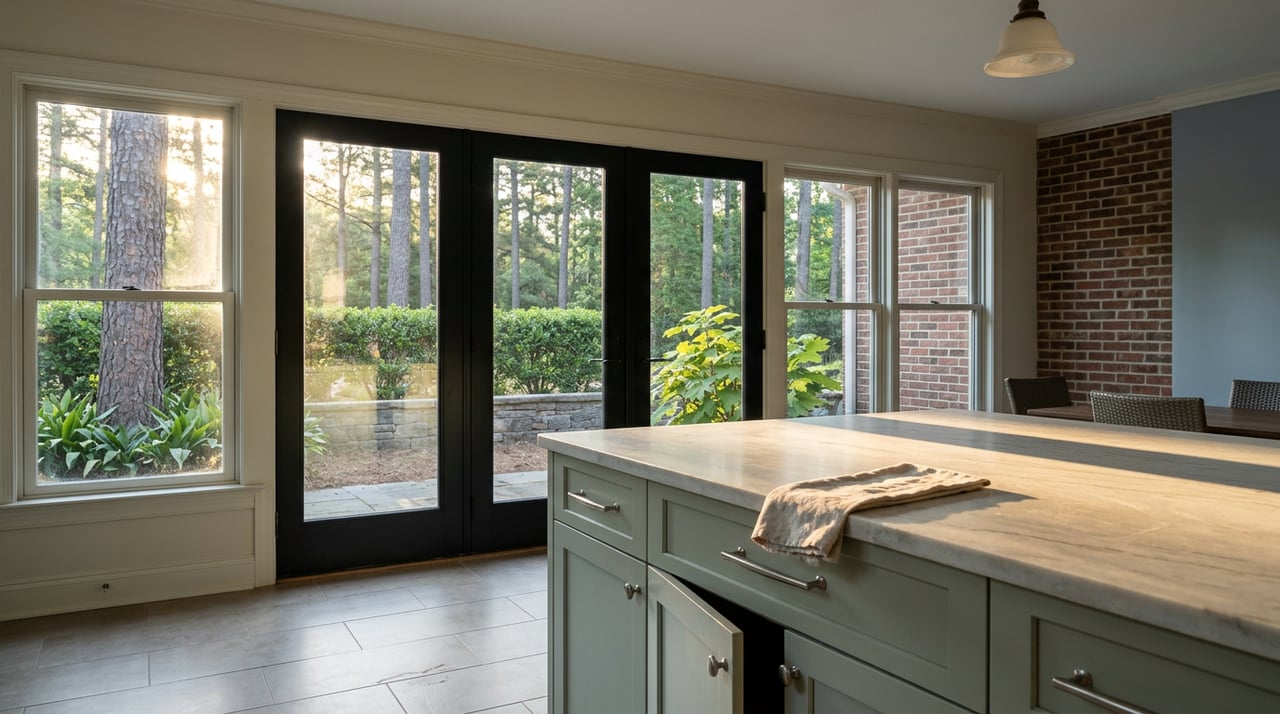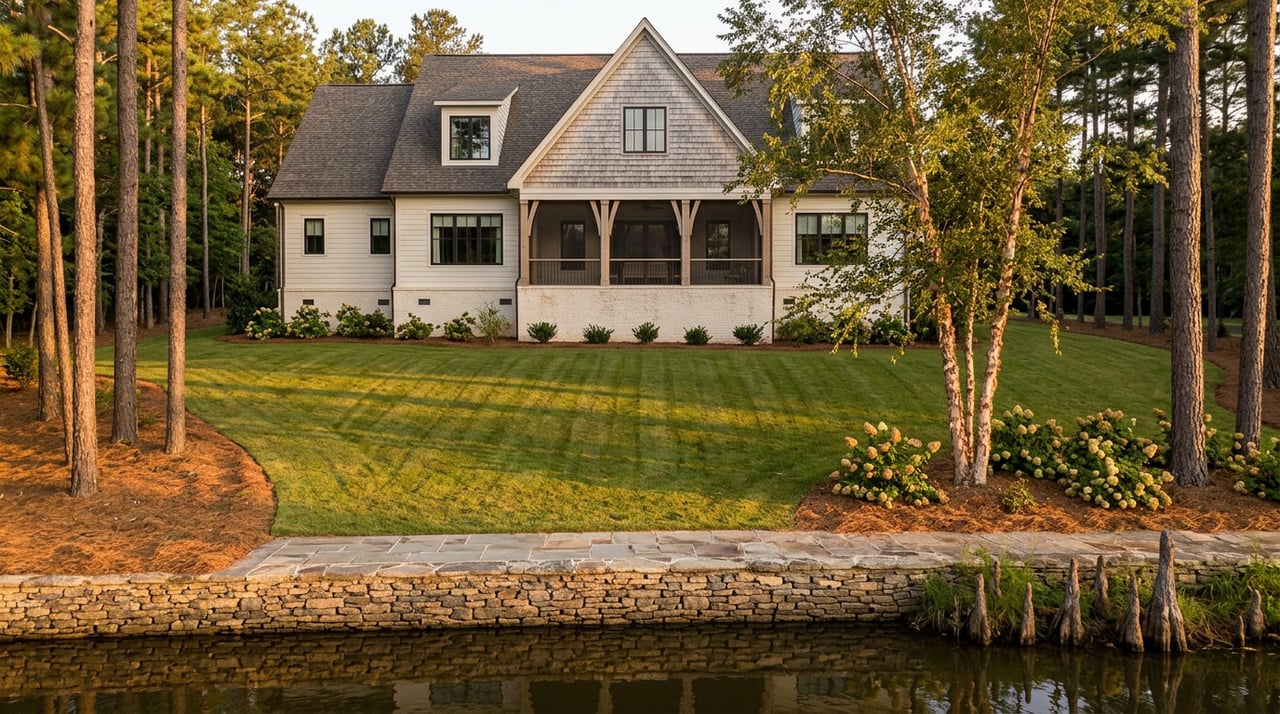
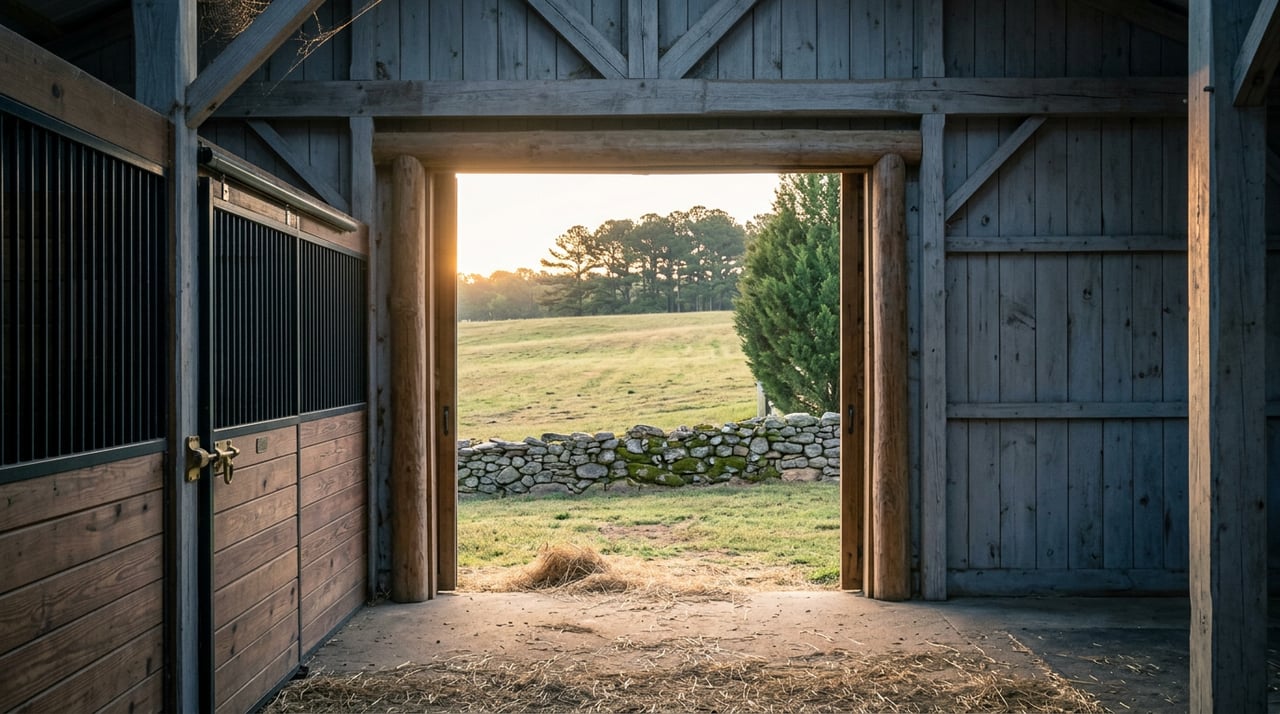
A listing came up recently for 16 acres on Aberdeen Creek, bordered by Camp Mackall and the railroad. The photos showed exactly what a horse buyer wants to see: open land, tree cover along the water, a quiet dead-end feel. Then came the line most buyers skim past because it sounds like standard conservation language: the tract sits under a Nature Conservancy easement, and no home construction is permitted. Not restricted. Not limited to one structure. Not permitted at all.
That property will sell as horse country acreage, and it will photograph like horse country acreage, and it will never have a barn on it under current terms. If you're comparing it on a spreadsheet against another 16-acre tract three roads over, the acreage number tells you nothing about which one you can actually build a life on.
That's the thing nobody explains clearly enough before a buyer starts touring land near Aberdeen: the acreage and the price per acre describe the size of the package, not what's inside it. Three separate legal layers determine what you're actually buying, and none of them show up in the listing photos.
Every tract of horse country land near Aberdeen carries some combination of three things: a recorded easement (or the absence of one), a subdivision history that may or may not have gone through formal county review, and a zoning designation that either matches or contradicts the private covenants attached to the community it sits in. A buyer who only asks "how many acres, what's the price" is skipping the three questions that actually determine whether the land does what the listing implies.
Land near the Walthour-Moss Foundation's trail network and the broader Camp Mackall area has attracted more of these easements over the years, often as a trade-off for tax benefits or as part of a larger conservation goal tied to the surrounding preserved land. The Aberdeen Creek tract is a real example, not a hypothetical: 16 acres, deed-restricted, zero home construction allowed under the current easement terms.
That doesn't make the land worthless. Plenty of buyers want unbuildable acreage adjacent to their main parcel, for pasture expansion or to guarantee nothing gets built next door. But if you're the buyer who assumed "horse property" meant "buildable horse property," you need the actual recorded easement document in hand before you write an offer, not a verbal assurance from anyone that "it should be fine." Easements vary widely in what they permit. Some allow a single home. Some allow none. The only way to know which kind you're looking at is to read the document itself, filed with the Moore County Register of Deeds.
Here's the layer almost nobody checks. Moore County's subdivision ordinance exempts a category of land division from the standard review process: when a tract is split into pieces each larger than 10 acres, with no new street right-of-way created, the county doesn't require it to go through subdivision review at all.
That means a 40-acre horse farm can become four separate 10-acre parcels without a planning board ever looking at the split, without the usual road, water, and sewer standards being triggered, and without the paper trail a buyer would expect to find when researching how a piece of land came to exist in its current shape. The ordinance language is public record and worth reading directly if you're seriously evaluating raw acreage in the county.
This isn't a flaw in the system. It's a reasonable accommodation for large rural landowners who want to divide land among family or sell off a back parcel without triggering a full development review. But it means the chain of title on a 10-, 11-, or 12-acre horse tract might look cleaner on paper than the actual history of how that parcel got carved out. A buyer's attorney or title company should be asked specifically whether the parcel was created under this exemption, and if so, what that means for easement access, shared wells, or driveway rights that might have existed before the split.
Not every property marketed as horse country carries the same zoning, and the difference matters more than most buyers expect. General RA, or Residential Agricultural, zoning covers a huge swath of Moore County and permits horses on qualifying lots, but it doesn't guarantee anything about your neighbors, your road, or your trail access.
Compare that to a community built specifically around horses. Grande Pines is a gated estate community with a five-acre minimum lot size, private paved roads, and underground utilities, structured so that no lot in the community can be carved down below that threshold. McLendon Hills sells some of its remaining equestrian lots with a recorded easement granting access to the community's private bridle trails, meaning the right to ride isn't just a neighborhood norm, it's attached to the deed.
Those two setups produce very different ownership experiences even though both would show up in a search for "equestrian property near Aberdeen." One protects your investment through a minimum-lot covenant that prevents future crowding. The other bundles trail access directly into what you're buying. Generic RA zoning gives you neither guarantee. It just gives you permission to keep a horse, which is a much lower bar than most buyers assume they're clearing.
Moore County's equestrian land market has been pricing all of this in, whether or not buyers understand why. As of September 2026, roughly 30 equestrian properties were listed for sale across the county, with an average list price near $1.92 million and an average cost of about $46,511 per acre.
That average isn't flat across the map. Listings that sit within an easy hack of the Walthour-Moss Foundation's North Country trail system consistently market that proximity as the headline feature, ahead of square footage, ahead of barn size, ahead of almost everything else. One listing near Griffin Lake Road advertises access to the trail system less than a quarter mile away. Another describes a home that backs directly onto the Foundation's land. Buyers are paying for the ride, not just the dirt.
But the trail-adjacent premium tells you nothing about which of the three layers above applies to any specific parcel. A property near the Foundation's land is just as likely to carry a conservation easement, a recent 10-acre split, or ambiguous zoning as one further away. Proximity drives the price. It doesn't simplify the paperwork.
A few concrete steps protect a buyer more than any amount of driving the property line looking for fence posts:
None of this requires distrust of the seller or the listing agent. It requires treating horse country acreage the way you'd treat any other property with unusual legal layers: verify before you commit, because the photos and the price per acre were never going to tell you the whole story.
Does a conservation easement always mean no construction at all? No. Easements vary widely. Some permit one home while restricting further building, others prohibit construction entirely, as with the Aberdeen Creek tract. The only reliable answer comes from reading the specific recorded document.
If a parcel was split under the county's 10-acre exemption, does that mean nothing was ever reviewed? It means the split itself skipped the formal subdivision review process. It doesn't mean the land has no history worth checking. Ask about the original tract's easements, shared access, and any conditions that predate the split.
Are all "equestrian" communities near Aberdeen the same? No. Some, like Grande Pines, protect lot size through a minimum-acreage covenant. Others, like McLendon Hills, attach trail access directly to the deed through a recorded easement. Generic RA zoning outside a planned community guarantees neither.
If you're weighing acreage near Aberdeen's horse country and want a second set of eyes on what a specific parcel actually carries in its recorded history, Jamie McDevitt has spent years walking this exact ground with buyers who wanted more than a pretty photo. Let's Connect before you write the offer, not after.
Jamie will take the time to understand your goals and will work tirelessly to help you reach them. Whether you are moving to the Pinehurst, Southern Pines area to play golf, swing a tennis racket, or simply run or walk through your neighborhood, let Jamie work for you.